
Fiber and copper patching in data centers
A patching task should leave an unambiguous answer to a simple question: what is connected to what? Gateflow supports agreed fiber and copper patching work in customer racks, using approved connection instructions and recording changes so the network team can check the resulting installation.
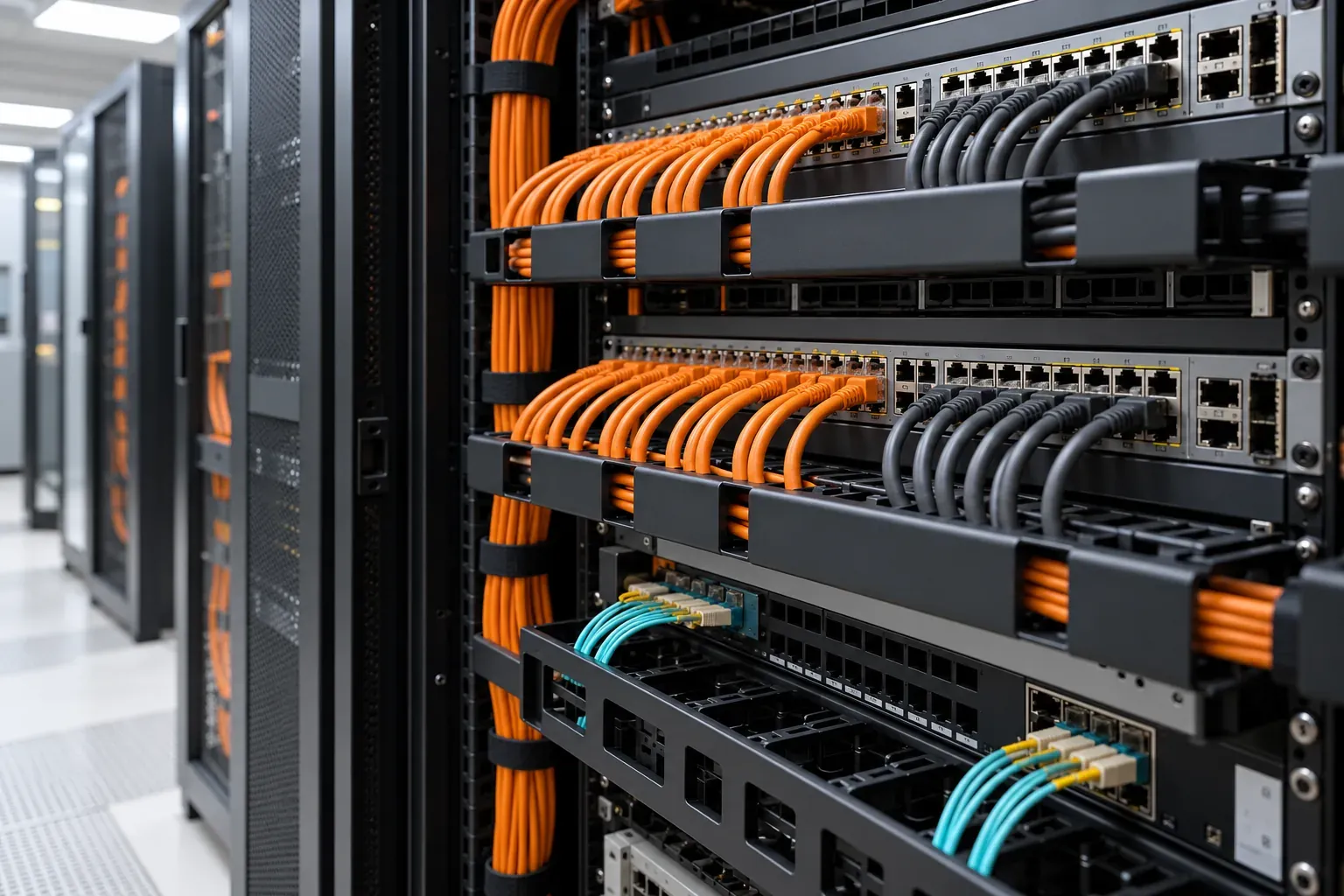
Fiber and copper patching: agree the permitted scope
Gateflow installs, replaces or removes the specified fiber and copper patch leads in the customer rack. The data center installation and moves assignment names both endpoints and the agreed checks. Operator-controlled cross-connects, permanent cabling and specialist measurements remain assigned to their respective providers.
Patch lists: identify both ends of every connection
Each instruction needs the rack, device and port at both endpoints, together with the intended cable type. An installer should not have to infer a connection from a general diagram. Gateflow flags missing details before work starts and records any approved corrections against the relevant connection.
Network preparation: confirm the configuration owner
Physical patching does not authorize a change to VLANs, routing or security policies. The network owner must confirm port readiness and decide what functional checks are required. IT infrastructure support can address an additional agreed preparation task, while configuration changes remain assigned to the responsible technical role.
Fiber handling: follow the equipment requirements
Connector compatibility, cable routing and handling requirements need to match the equipment and operator instructions. Uncertain specifications should be resolved before connecting a lead. Where a project requires specialist cleaning, inspection or certified measurement, the required capability and responsibility must be established explicitly in the work package.
Live connection changes: coordinate the release
Disconnecting a cable can interrupt a service even when the task looks minor. Technical migration coordination links the patching sequence to maintenance approval and application checks. Gateflow works from the authorized change list, with a named contact able to decide if a connection differs from the documented state.
Patch verification: distinguish physical and service checks
A completed connection record confirms the assigned physical work; network and application acceptance require their own checks. The agreed verification should state who reviews link status, connectivity and service behavior. Failed checks remain open with the observed result rather than being marked complete because the correct cable was fitted.
Connection records: capture the actual endpoints
The final record should reflect replacements and deviations made during the window. Gateflow's working process sets the required documentation before installation begins. Unused cables, unavailable ports and connections awaiting approval are identified separately, helping the customer reconcile the patch list with the installation left on site.
Patching support: prepare a precise request
Provide the number of connections, cable specifications, endpoint list and proposed access window. Mention whether existing services will be disconnected and whether the operator must complete related work. Gateflow checks the assignment against the required skills and permissions before agreeing the on-site contribution and handover format.
Fiber and copper patching: discuss the connection list

Gateflow connects the specified fiber and copper leads according to the approved patch list. You receive the final endpoint record and the results of the agreed connection checks.