
Rack and cable documentation for data centers
An outdated rack diagram makes even a small change harder to prepare. Gateflow supports rack and cable documentation when customer teams need to reconcile existing records, prepare a move or record a completed installation. The work focuses on information the next technician can actually use.
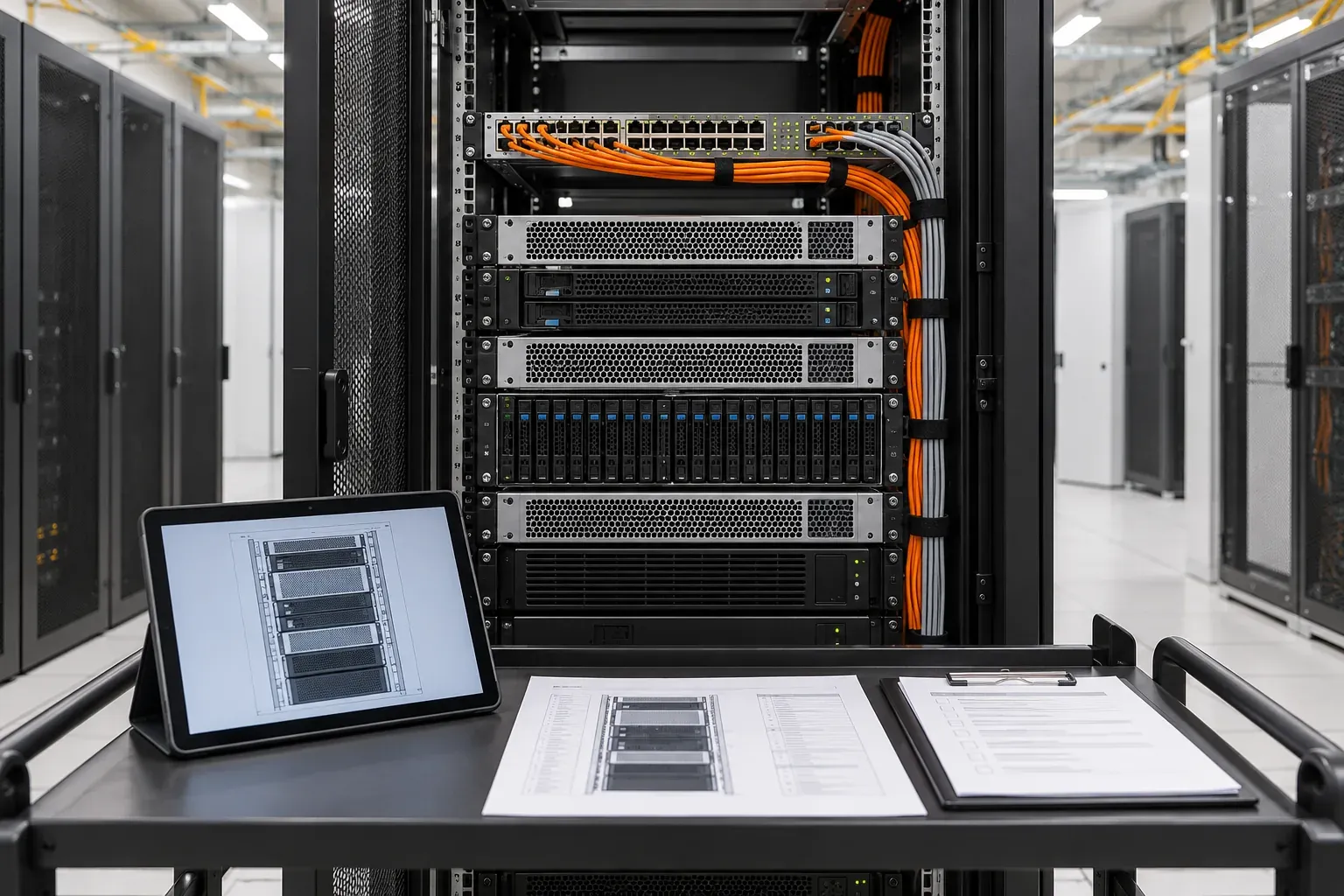
Rack documentation: agree the record that operations needs
A diagram, asset list and connection table answer different questions. Gateflow agrees the required format through IT infrastructure support before collecting details. The customer can retain an existing documentation system; the assignment should improve the records used in daily work rather than introduce another disconnected source of information.
Rack layouts: capture positions and uncertainty
The record connects equipment identity with its rack and position. Where a label is inaccessible or a location cannot be verified, that limitation stays visible. Gateflow separates observed details from information copied from older files, allowing the customer to decide which remaining discrepancies justify a further inspection.
Cable records: relate both endpoints to the installation
A cable identifier is useful when the associated endpoints are equally clear. Data center installation and moves can include agreed recording of connections changed during the project. Existing live connections require an authorized inspection approach, so documentation work does not become an unplanned disconnection merely to trace an uncertain route.
Naming conventions: make new entries consistent
Different labels for the same rack can create apparent conflicts in otherwise correct records. The project should establish which names are authoritative and how old names are retained as references. Gateflow reconciles the agreed entries without silently rewriting identifiers that other teams still rely on for their own work.
Migration documentation: distinguish current and target states
A planned rack drawing should not overwrite the record of the current installation before the move happens. Technical migration coordination can keep source, target and completed states connected. This helps the team compare intended changes with what was actually installed and preserves information needed if the migration sequence changes.
Documentation checks: review a record by using it
A useful review asks whether another person can locate the stated device and understand its recorded connections. Missing context becomes easier to spot in that exercise than in a visual check of the spreadsheet. Gateflow records corrections and unresolved questions for the customer owner to approve.
Operating documentation: assign the next update
Even accurate records become unreliable if nobody owns later changes. Gateflow's working process defines the handover and the customer role that maintains the result. The final package includes agreed formats and remaining gaps, so updating the documentation after another installation is an assigned task rather than a shared assumption.
Rack and cable records: show the current problem
Share an example of the existing records, the approximate rack scope and the change the documentation must support. Explain whether physical verification is permitted and who owns the source system. Gateflow can then distinguish a reconciliation task from a site survey and agree the appropriate contribution.
Rack and cable documentation: review the current records

Gateflow reconciles the agreed rack positions and cable endpoints with your existing records. You receive updated rack plans and connection tables that your operations team can use for the next change.